

 Preparation
Your first Canton Fair visit: a practical trip-planning guide
Planning your first visit to the Canton Fair in Guangzhou? Learn how to choose the right phase, register as an overseas buyer, collect your badge, pick a hotel and prepare useful supplier meetings.
A first visit to the Canton Fair can be productive, overwhelming or both. The difference usually begins before the flight. If you are travelling to Guangzhou to meet manufacturers, compare samples or source products for a new market, the first decision is which exhibition phase covers your products. Registration, your hotel and the rest of the itinerary should follow that decision.
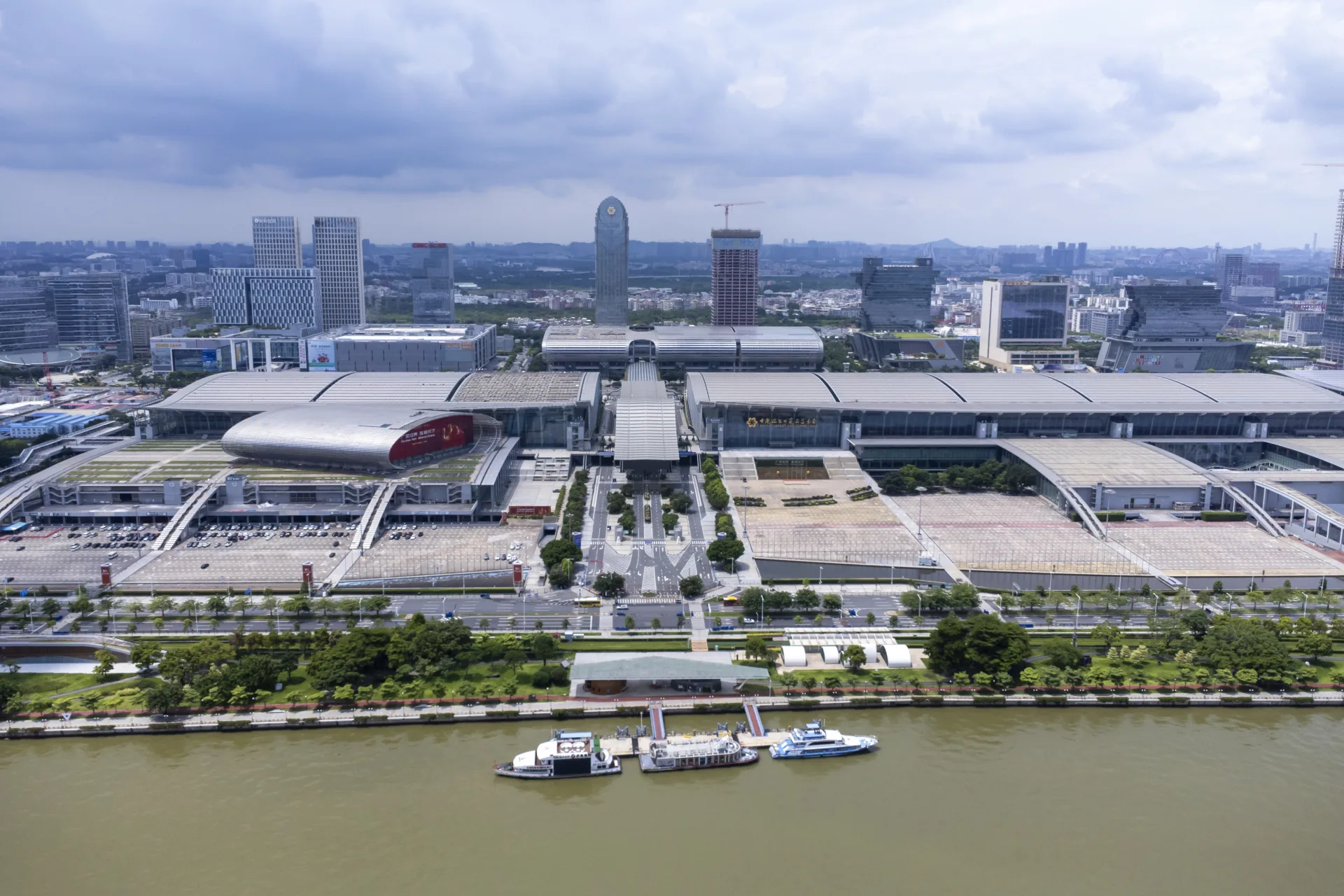
The Canton Fair, officially the China Import and Export Fair, takes place in Guangzhou. Its principal venue is the Canton Fair Complex (中国进出口商品交易会展馆) in Pazhou, at No. 382 Yuejiang Zhong Road, Haizhu District, Guangzhou. It is a large trade event with numerous exhibition halls, not a single showroom that can be covered in one afternoon.
This guide is intended for an overseas buyer preparing a genuine business visit. It explains what to verify, how to avoid preventable mistakes and how to make use of your time on the show floor. Official schedules and badge rules may change between editions, so confirm edition-specific details on the organiser's website.

1. Start with a sourcing brief, not a flight search
“I want to find suppliers in China” is not yet a useful plan. Decide whether you are looking for finished goods, a factory to make your own designs, components, machinery, packaging or materials. Then define the specifications you must be able to discuss in front of a sample.
Separate non-negotiable requirements from preferences. For sportswear, that might mean fabric composition, weight, stitching, sizing, patterns and the ability to produce a pre-production sample. For industrial equipment, it might include capacity, electrical requirements, spare parts, maintenance, documentation and acceptance tests.
A concise sourcing brief should also state your intended market, initial order range, whether you need private-label branding, any restrictions on materials and the questions you want resolved before requesting a quotation. Your requirements are not a list of official Fair admission conditions; they are a way to turn general conversations into comparable supplier proposals.
Avoid trying to cover a dozen unrelated categories during a first visit. Choose one principal sourcing objective and, if useful, a closely related product group. The Fair's size makes an unfocused itinerary expensive in time, even when getting from one hall to another appears straightforward on a map.
2. Choose the Canton Fair phase that actually fits your products
The Fair normally has a spring and an autumn edition, and product groups are split between three phases within each edition. Each phase occupies its own dates. This is fundamental: visitors can be in Guangzhou during the Canton Fair and still miss the exhibitors they came to see.
The organiser published the following breakdown for the 140th edition, autumn 2026:
Phase | Dates for the 140th edition | Main product groups |
|---|---|---|
Phase 1 | 15–19 October 2026 | Consumer electronics and appliances, industrial manufacturing, automation, machinery, vehicles and parts, lighting, energy, hardware and tools |
Phase 2 | 23–27 October 2026 | Household products, kitchenware, gifts, interior decoration, furniture, building materials and bathroom equipment |
Phase 3 | 31 October–4 November 2026 | Clothing, fabrics, shoes, bags, children's goods, sports products, health-related items, personal care and pet products |
These are dates for the 140th edition only. As of the editorial check on 2 November 2026, Phase 3 was underway. Do not automatically reuse the dates for the next spring or autumn edition. The organiser also lists 09:30–18:00 as business discussion hours for the 140th edition; particular services and events may have different schedules.
Some seemingly related products appear in different phases. Furniture, home textiles and garments, for example, do not necessarily share the same exhibition window. Search the official category breakdown and actual exhibitor listings before paying for flights. If you need two phases, remember that the schedule includes gaps between phases, not uninterrupted exhibition days.
3. Shortlist exhibitors before leaving home
The official buyer portal links to supplier and product searches, attendance guidance and maps. The official Canton Fair app also supports exhibitor discovery, digital product catalogues and itinerary planning. Use these tools to identify potential conversations, not simply to collect company names.
Build a working spreadsheet with the company name, product category, relevant model, company profile link, hall and booth for the selected edition, contact, priority and meeting status. Booth assignments can differ from one edition to another; an old screenshot is not a reliable guide.
Label each lead A, B or C. A means the company fits your main brief and merits a scheduled meeting. B means a useful comparison or backup. C means a possible discovery if you have time. This ranking helps preserve energy for the conversations most likely to lead to samples, a quotation or a factory visit later.
For a meeting request, explain what you intend to buy, the market you serve, the specification or sample you wish to discuss and the rough order range. First establish that the company will display the relevant products during your phase. Then agree a time and record who you expect to meet. A contact's presence on a company website does not guarantee that person will attend the booth.
4. Register as an overseas buyer and apply for your badge
Three related processes are often confused: pre-registration, Overseas Buyer Badge application and invitation-letter application. They serve different purposes and may require different steps.
In August 2026, the organiser announced year-round overseas buyer pre-registration. For first-time attendees, its published process is:
Visit the official Buyer Service System through the Canton Fair website.
Register an account using accurate personal and business information. Indicate that you do not already hold a buyer badge if that is the case.
Complete the pre-registration questionnaire and indicate your sourcing interests.
Apply for the Overseas Buyer Badge, then save any confirmation or QR receipt provided.
Review the application status and confirm the appropriate collection point for your documents and edition.
The organiser's September 2026 guidance says new standard overseas buyer badges, replacements and renewals are free for the 140th edition. It also lists an original eligible identity document, a business card and a pre-registration QR-code receipt among the documents for collection. Other categories, including some accompanying-personnel passes, have separate eligibility rules and fees. Verify the latest version before travelling.
Pre-registered buyers may be offered expedited badge collection at designated registration points in the complex, airport or participating hotels. That does not mean every hotel is authorised or every collection point is open at all times. Check the specific list, location and service hours relevant to your edition and identification type.
5. Your fair badge is not permission to enter China
A buyer badge is for admission to the event. It does not replace a passport, visa or visa-exempt entry entitlement. The organiser's invitation letter is a separate service that may support an application where needed; receiving one does not guarantee a visa or entry approval.
China's entry rules differ by nationality, passport type, purpose of travel, length of stay and itinerary. Visa-free arrangements and transit policies have distinct conditions and can change. Before paying non-refundable travel costs, consult the National Immigration Administration's official guidance and the appropriate Chinese embassy or visa application authority for your situation.
Keep your hotel address, return or onward transport details, buyer-registration confirmation and relevant business contacts together. They can make travel more organised, but this is not a claim that border officials will always require that particular set of documents.
6. Getting to Guangzhou without sacrificing your first business day
Guangzhou Baiyun International Airport (CAN) is the city's main international airport. Before booking, check your actual airport of arrival, terminal, transfers and expected arrival time. Your published flight arrival is not the time you will be ready to leave the airport.
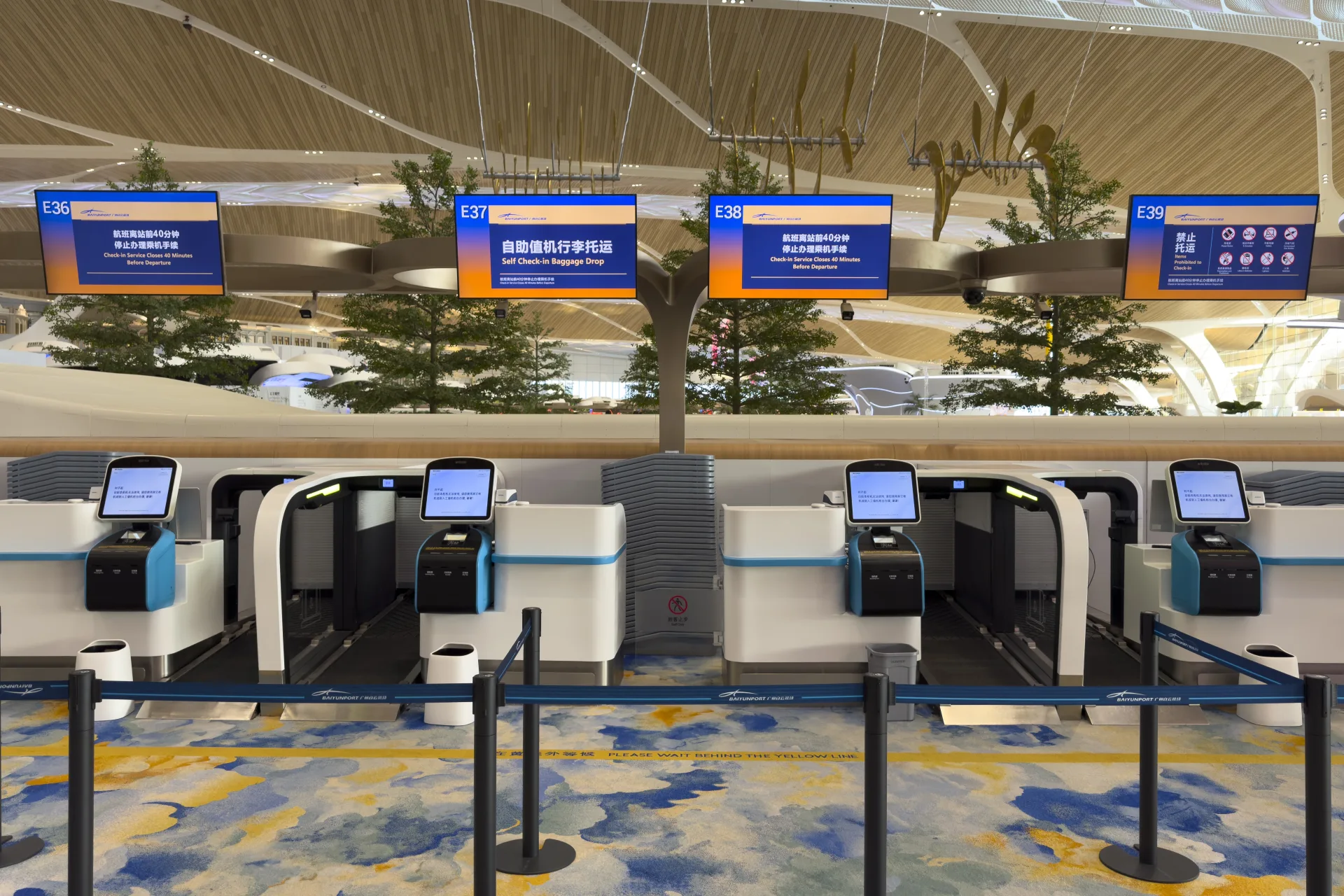

Where possible, reach Guangzhou before the first important meeting, rather than arranging a critical factory conversation shortly after landing. Immigration, luggage, local transport, hotel check-in and locating the show entrance all take time. The margin matters even more if you are new to Guangzhou, arrive late or carry equipment and sample cases.
The most suitable transfer depends on your terminal and hotel location. Public transport may be preferable with light luggage, while a licensed car service may be easier with bulky items. Avoid trusting a generic claim that every traveller can reach the Canton Fair in a fixed number of minutes: route, interchange and departure conditions differ.
Some buyers enter mainland China via Hong Kong, Shenzhen or another city. If that is your itinerary, plan the complete sequence of border formalities, station transfers and the final connection to your hotel, rather than describing the trip as simply “arrive in Guangzhou.”
7. Where to stay: choose the route to the halls, not a hotel slogan
For a first Canton Fair trip, judge hotels primarily by the actual route to the Canton Fair Complex and your relevant hall area. A short straight-line distance on a booking map may hide a difficult pedestrian approach, a long detour or an inconvenient metro interchange.


Pazhou / Haizhu. This is a sensible starting point for buyers whose main purpose is the Fair. Being relatively close to the venue may reduce daily travel. It does not automatically mean every property is an easy walk to your entrance, nor does it guarantee low rates or available rooms during a busy exhibition period.
Zhujiang New Town / Tianhe. Consider this when you also have office meetings, evening business appointments or other reasons to stay in a wider commercial district. Check the precise transfer to metro line 8 or 11 and allow for the return journey after a long day.
Other metro-connected districts. These may offer different accommodation types and budgets. Compare an actual morning journey to the relevant entrance, not only the number of kilometres. A hotel near the airport can be useful for an unusually late arrival or early departure, but it is not automatically a good base for repeated days at the Fair.
Before you confirm a booking, verify the property's full address, the nearest practical metro entrance, the route to your exhibition zone, check-in times, cancellation terms and any announced shuttle. If a hotel advertises a “Canton Fair shuttle”, request the dates, departure points, times and where it drops guests. Without that information, do not assume the service operates for all three phases.
This article does not rank or recommend individual hotels: current room availability, prices and booking conditions have not been independently verified.
8. Getting to the Canton Fair Complex and choosing the right entrance
The organiser gives the venue address as No. 382 Yuejiang Zhong Road, Guangzhou. Official transport information identifies Xingangdong (新港东) and Pazhou (琶洲) on Guangzhou Metro line 8, and Pazhou on line 11, as relevant stations. A published transport guide for an earlier session mentioned Xingangdong exit A; Pazhou exits A/B/C on line 8; and exits E/F on line 11. Exit access must be reconfirmed for your own date.
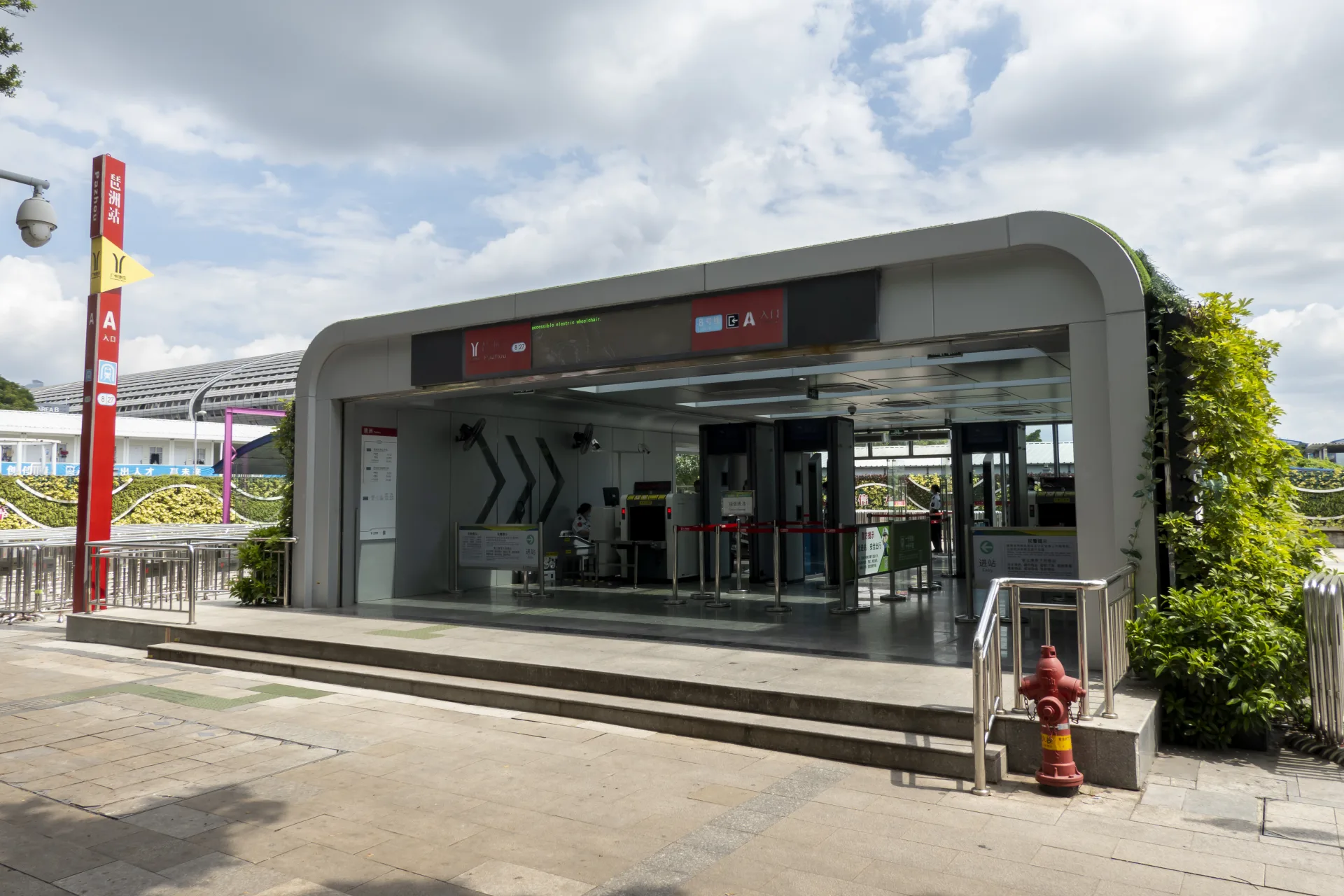

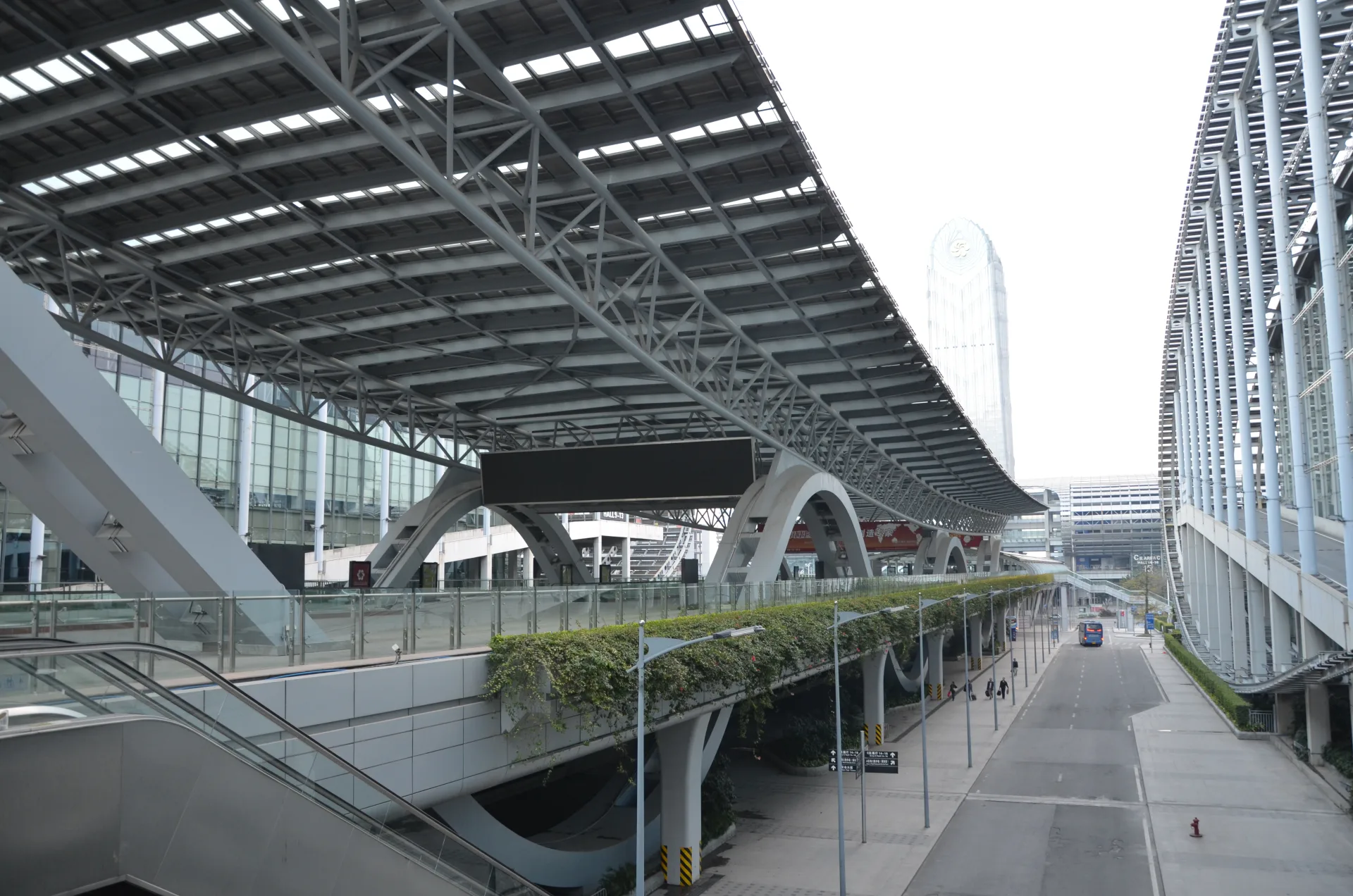
The Fair Complex contains multiple exhibition areas, with different halls and pedestrian links. A convenient station for one hall may be less convenient for another. Use the current edition's floor plan and your exhibitor's hall number before choosing a metro exit, taxi drop-off or hotel shuttle.
When using a taxi, show the Chinese venue address and the appropriate vehicle access point, rather than just asking for “Canton Fair”. During major events, vehicle circulation and drop-off areas may be controlled or altered. Hotel shuttle routes may also take passengers to only one designated part of the venue.
Older photographs and maps can help visitors understand the scale of the buildings, but they are not evidence of which doors are open or where a specific exhibitor is located today.
9. Plan the exhibition day around conversations, not step counts
A common first-day mistake is to try to “see everything”. Start with the current floor plan and group your A-priority suppliers by neighbouring halls. Use unbooked intervals to compare alternatives and discover products that were not in your original shortlist.

An illustrative day might begin with two agreed meetings, continue with a concentrated visit to one product area, and leave the later afternoon for further discussions and notes. This is not an official Fair schedule. Allow time for finding stands, navigating security points, eating, charging devices and resolving surprises.
Record the useful details immediately after each meeting: business name, contact, model or sample reference, provisional quotation terms, promised documents, next action and deadline. Photograph a booth or business card only if permitted. Without consistent notes, dozens of visually similar products and promises are easy to confuse a few days later.
The Canton Fair app can support exhibitor search, digital catalogues and itinerary building. It does not replace your own supplier comparison table, notes or follow-up messages.
10. Questions worth asking at a supplier stand
A convincing booth is not proof that the business owns its manufacturing site. Ask whether you are speaking to a manufacturer, a trading company or a group combining both activities. Establish the legal entity you would contract with, where production is carried out and who controls quality.
Use the same framework for comparable suppliers:
Product specification: the exact material, model, configuration, packaging and available customisation.
Minimum order quantity: MOQ by item or colour, trial-order terms and volume-based quotation assumptions.
Samples: cost, lead time, approval method and whether the sample matches production specification.
Lead time: when production starts, what triggers the clock and how orders are affected by seasonal workload.
Quality control: tolerances, inspection checkpoints, acceptance criteria and non-conformity procedures.
Shipping terms: packaging, markings, Incoterms and the named delivery or handover location.
Destination-market compliance: which party obtains the necessary documents, tests and other evidence for your import market.
These are practical negotiation topics, not promises that every supplier can accept a particular MOQ or provide the documents you need. Ask for important terms in writing after the Fair, so that you can compare like with like.
11. Treat the Fair as the start of due diligence
An efficient first visit should produce a high-quality shortlist, not necessarily a signed contract. A low unit price can be misleading if the material, tooling, packaging, testing or shipping assumptions differ from the alternatives.
For higher-risk orders, the next steps may include sample testing, company checks, a manufacturing audit, contract review or shipment inspection. Which checks are justified depends on your product, order value and exposure to failure. A friendly conversation and a product demonstration cannot substitute for an independent assessment when one is warranted.
Be particularly careful with vague claims such as “all certificates available”, “any delivery date” or “identical quality at half the price”. Request the specific standards, documents, quantities and responsibilities rather than accepting broad assurances. Resist pressure to transfer money simply because an exhibition-only discount allegedly expires in an hour.
12. A realistic plan for one, two or three days
One day: choose one narrowly defined sourcing category and a compact group of halls. Put your essential conversations first and avoid far-flung visits across the complex. For a first-timer, one day is only practical when the purchasing brief is focused.
Two days: reserve day one for pre-selected exhibitors and day two for alternatives, samples and follow-up discussions. This offers room to test whether the first round of answers was consistent.
Three days: use day one to map the market, day two to investigate the strongest suppliers in depth, and day three for second meetings and remaining questions. These are editorial examples, not the Fair's official programme. Three consecutive days cannot cover products shown only in different phases, because the phases are separated in the calendar.
Allow additional time for offsite business meetings, any factory visit and the journey to the airport. A factory inspection is a separate activity, not something automatically completed on a break between exhibition halls.
13. Budget without fictional prices
Include flights or rail travel, accommodation, local transport, meals, mobile connectivity, interpretation if needed and any samples or sample shipping. Further due diligence services, if required, are separate budget decisions after you identify a serious candidate.
Hotel prices, airfares and ride costs vary with dates and booking terms. A universal “cost of visiting the Canton Fair” would be misleading without an origin city and phase. Compare actual booking options for your session, including daily travel cost and cancellation flexibility.
Do not confuse the free standard overseas buyer badge under the published 140th-edition rules with paid accompanying-personnel badges or commercial intermediary services. Use the official registration channel and keep receipts for any legitimate charges.
14. Mistakes to avoid on a first visit
Arriving for the wrong phase. The Fair's name is the same, but the product categories are not. Confirm the phase before making non-refundable bookings.
Choosing a hotel by map distance alone. Check the metro station, actual route, hall area and evening return.
Leaving badge administration to opening morning. Pre-register, save the confirmation and verify collection rules before travel.
Collecting contacts with no context. A name and business card are not enough; save the specification discussed and what the supplier committed to provide.
Assuming every booth represents its own factory. Treat manufacturing claims as items to verify, not conclusions to make from the display.
Failing to follow up. After the trip, request comparable written quotations, documents and samples. That is how exhibition contacts become actionable supplier evaluations.
15. Final checklist before departure
Defined the main product group and essential specifications.
Verified the correct phase and edition-specific dates on the organiser's website.
Shortlisted exhibitors and saved current hall/booth references.
Completed pre-registration, applied for the buyer badge and checked the required original documents.
Separately confirmed the entry requirements for your nationality and itinerary.
Chosen accommodation based on the actual journey to the relevant hall area.
Saved the venue's Chinese address, current floor plan and a transport backup.
Prepared meeting notes, comparison criteria and sample questions.
Left enough time for unexpected delays, repeated discussions and the return trip.
The central principle: choose the phase for your products, assess suppliers against consistent criteria and book your hotel for the actual trip to the halls. Your first Canton Fair visit should end with a clear shortlist and next steps, not just a suitcase full of brochures.
Official sources
Canton Fair official website: https://www.cantonfair.org.cn/en-US/
140th edition phases and dates: https://www.cantonfair.org.cn/zh-CN/pages/727090749086445568
Buyer services and exhibitor search: https://www.cantonfair.org.cn/en-US/buyerguide
Year-round overseas pre-registration (19 August 2026): https://www.cantonfair.org.cn/en-US/content-detail?headerTab=4&id=1019084749798846464EN
Badge guide (26 September 2026): https://www.cantonfair.org.cn/en-US/content-detail?id=148399eb233648dbb67d26374001e436
Buyer Service System: https://buyer.cantonfair.org.cn/
Official invitation guide: https://www.cantonfair.org.cn/en-US/pages/790884271194980352
Organiser's transport guide (2025; recheck exits): https://www.cantonfair.org.cn/zh-CN/posts/942605607431987200
Canton Fair app: https://cief.cantonfair.org.cn/en/app/appintro-h5.html
Chinese National Immigration Administration: https://en.nia.gov.cn/n147418/n147463/index.html
Car rental with a driver in China
For exhibition visits and business meetings.
