

Velvet Path catalog
LOGFORUM’26 “Warehouse”: warehouse logistics forum
LOGFORUM’26 “Warehouse” runs in Moscow on 19–23 October with workshops, a conference and warehouse tours focused on logistics.
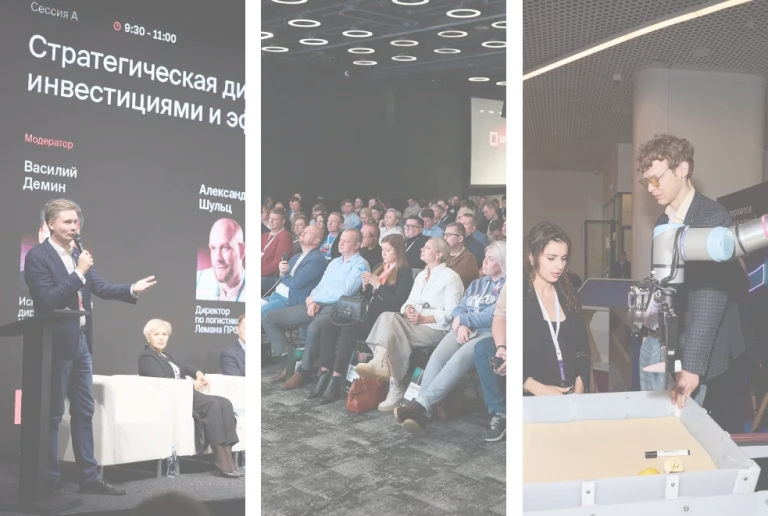
About the event
LOGFORUM’26 “Warehouse” combines three formats: practical workshops on 19–21 October, a conference on 22 October and warehouse tours on 23 October. In the published programme, the workshops cover audit, technology modernisation and the economic case for change; the conference discusses industry solutions, while the tours introduce warehouse sites. Each format has its own programme.
The 19 October module describes an audit as a full cycle: an initial diagnosis of warehouse conditions, assessment of operating efficiency, preparation for a detailed examination, recommendations and a financial and economic case for change. This makes the block relevant to managers who first need to locate process losses before choosing organisational or technical measures. The listed questions move from why an audit is needed to how to assess the current operation and test whether a proposed solution is economically justified.
The 20 October module focuses on warehouse technology modernisation, from conventional non-automated solutions to robotics. The official description emphasises how to set priorities when funding is limited, choose a suitable warehouse-logistics approach and account for infrastructure needed for automation. This links technology selection with the readiness of a particular site: compare the facility and its flows first, then decide where a new system could fit into an operating process.
The 21 October module is about making an economic case for change. Its published subjects include finding improvement opportunities, estimating effects, payback tools and tax literacy, followed by presenting a project to management and planning its implementation. This is a distinct financial step after auditing and technology selection: it identifies the calculations and arguments the organisers propose to include in a decision. The description is about seminar content, not a guarantee that any project will pay back.
For the 22 October conference, the timetable divides sessions between two halls and four blocks: 09:30–11:00, 11:30–13:00, 14:00–15:30 and 16:00–17:30. The opening session lists effective-warehouse strategies, changing decisions and teams, resilience, budget reserves and the economics of robotics. The next block runs robotics cases alongside warehouse optimisation. The published case description names AMRs, manipulators, 3D shuttles and goods-to-person systems; its focus is the task, technology choice, cost and effect on productivity, expense and time.
After the midday break, the schedule places robotics technology selection alongside the warehouse digital stack. For robotics, the programme connects a bottleneck to a type of solution: space constraints to high-density storage, internal travel to mobile robots, and picking to sorters, conveyors and palletisers. It also lists total cost of ownership, labour-cost effects, vendor service and integrating equipment from different suppliers with a WMS. The digital session covers WMS, analytics platforms and AI tools, as well as when to adapt a system and when to replace it.
The final sessions widen the discussion from local efficiency to network resilience. A debate on optimisation and investment compares quick improvements without large capital spending with automation and systemic change. The adaptive-warehouse session covers peak loads, shifting flows between sites, inventory, flexible robotics and modelling decisions before risking live operations. These topics help a visitor connect the agenda to a concrete question: improve an existing process, select a technology or test the resilience of a wider logistics network.
The official page identifies company, logistics and warehouse leaders, manufacturers, retailers, suppliers, transport and logistics operators, and equipment businesses among its intended audience. Readers can therefore navigate the agenda by role: operations teams may focus on audit and optimisation; automation leads on technology scenarios; finance leaders on project economics and payback; owners and logistics directors on connecting resilience and throughput with network development. These are ways to use the published topics, not individual advice from the organiser.
The tour programme listed for 23 October includes sites with different operating profiles. The description of the Severnaya Zvezda distribution centre names sorting, pallet wrapping, telescopic conveyors and automated loading; the TBM warehouse description covers products from small fittings to long profiles, plus 5S, TWI and workload balancing. RALF RINGER is described with AS/RS, stacker cranes and a sorter, while the 5post site covers parcel and e-commerce handling with automated sorting. These are details in the route descriptions, not confirmation that visits took place.
Other listed routes show several more operating models: Snezhnaya Koroleva is described with mezzanine, front-rack and buffer zones managed through 1C:WMS; Moscow Brewing Company with a path from production through laboratory and bottling to finished-goods storage; and LogLab with 3PL work and a combination of WMS, TMS and a client portal. Vostok-Service lists a goods-to-person system, while Truck Motors describes order sorting by several methods. The sites are part of the published tour itinerary; the saved materials do not separately confirm the street address of each off-site destination.
The forum is organised by KSL. The main venue linked from the website is RBC Event Centre, 52 Kosmodamianskaya Embankment, Building 7, Moscow 115035. For the practical workshops and warehouse tours, use the separate joining instructions for the relevant format.
Venues and halls

Getting there

RBC Event Centre
Moscow · Russia
The address is listed on the venue page.

Event participants

Participant information is not available yet.
Topics and calendar
 Calendar
| Selection | Month | Year |
|---|---|---|
 Russia | October 2026 | 2026 |
| Moscow | October 2026 | 2026 |
 Logistics and supply chain | October 2026 | 2026 |
 Forums | 2026 |